Showing posts with label Planet. Show all posts

Friday, 9 November 2012

The Interplanetary Travel Guide

The last couple of weeks have seen exciting developments in exoplanet astronomy. After 3 years of observations, astronomers at the European Southern Observatory discovered a planet orbiting the closest star system to our own Sun. Detecting this Earth-mass planet required measuring the velocity changes of Alpha Centauri B to a remarkable accuracy of 51cm/s (or 1.1mph). Not only was this the closest exoplanet yet found, it was also one of the smallest, with a minimum mass only 1.3 times that of Earth. However, this rocky world orbits so close to its star that day-side surface temperatures are likely to be around 1500K. Not exactly a habitable world, but it shows that exoplanet astronomy is progressing towards finding Earth-like worlds.

Another planetary discovery, announced on Thursday, appears to be a much better candidate for life. This planetary system, around 32 light years away, contains six planets orbiting the dim star HD40307. One of these planets, a super-Earth orbiting at 0.6AU, has a surface temperature of between -17° and 52°C. Although more than 7 times the mass of Earth, such a planet may have the potential to support life.

These discoveries have generated lots of talk about interplanetary exploration, especially along the lines of 'Lets drop everything and send humans and spaceships to these planetary systems!'. However, the gulf of space is unimaginably huge. Even with the fastest spacecraft ever built by humans, Voyager 1, it would take 70,000 years to get to Alpha Centauri B. If the distance between Earth and the Sun were scaled to fit in the palm of your hand, the nearest star would be 13 kilometres away! So what would humanity need to actually get there? Here is, entirely in my own view as a student of exoplanets, what we need to do to send a space-probe to another planet.

  1. Find them all. With space missions like Gaia and ground-based scans like HARVPS & MEarth we could probably find all the earth-like planets around local stars by 2030.
  2. Get a closer look. If the planet passes between us and its star (transits) we can get a glimpse at its atmosphere using something like JWST or EChO. Non-transiting exoplanets like this one are a little tougher, but projects such as TPF and Darwin will be able to image them and check their atmospheres for oxygen & water. Timeframe: by 2040.
  3. Explore the solar system. Sending humans to an asteroid, and eventually Mars is just as important in the interplanetary space race. There's not going to be any appetite for space travel if we don't keep exploring our own solar system. Timeframe: by 2050

  4. Sending a probe 10 light years in a human lifetime is going to take some big technological developments including:

  5. Laser-powered Nuclear Fusion. This looks, according to an old UK study called Daedalus, to be the best bet for fuel on an interplanetary spacecraft, achieving speeds up to 12% of the speed of light (0.12c). Timeframe: 2030
  6. Cheap launches to Earth-orbit. To assemble such a large craft in orbit will require cheap delivery to ever be feasible. Timeframe: 2040+
  7. Earth-orbit refuelling and asteroid mining. Timeframe (if Planetary Resources are to be believed): 2020
  8. Global Cooperation. Unless one country wants to be shackled with the most expensive mission ever, we're gonna need everyone involved. Timeframe: never?.
  9. Mining the materials, building the parts, organising thousands of rocket launches and finally assembling more than 50,000 metric tonnes of metal and fuel into a spacecraft that might take a lifetime to reach the nearest stars and cant even stop or slow down at the other end. Timeframe: 2100+
So there's lots to do, and everyone can get involved! I'm going to concentrate on 1 & 2 for now by writing some code for my project on the Exoplanet Characterisation Observatory (EChO), but probably the best way to help our species get to another planet is to support science! Only if scientific agencies like NASA and ESA are widely supported by the public and adequately funded will such a project ever get off the ground.

Friday, 3 August 2012

I Declare The Martian Olympics Open!

For all you sport-loving space enthusiasts out there, this August is going to be one hell of a month. In London the 2012 Olympics moves into a thrilling concluding week, and on Monday morning at 6:30am (UK time), NASA's new Mini Cooper-sized science dream machine lands on the surface of Mars. So I thought why not combine these two amazing spectacles...
Welcome to the Mars Olympics!


Our Competitors:

Mars has hosted three operating rovers so far, with Curiosity hoping to be a fourth. Russian missions Mars-4 and Mars-5 also brought rovers to Mars, but these failed to function.

Sojourner:      
This little scamp hitched its ride to Mars aboard the stationary Pathfinder mission in 1997. Its six wheels set the standard for future rovers, but how will it fair with a frankly diminutive size of only 65cm long?

Spirit/Opportunity:      
These sister rovers have roamed the Martian surface since their January 2004 landing. These rovers have a similar design to Sojourner with solar panels and 6 wheels, but will their size advantage (1.6m long and 1.5m high) help push them into the lead?

Curiosity:      
The newest and most expensive of the bunch, Curiosity is the heavyweight contender. At 3m long, it towers the previous rovers. But will its bulk slow it down?

The Events:


High Jump
The best humans can jump over 2.4m, but how do our Mars missions compare?
Sojourner:                    80702129300m
Spirit/Opportunity:  80702129300m
Curiosity:                      80702129300m

So it's a tie! All four rovers have taken the leap across the emptiness of space to Mars. No human, rocket propelled or otherwise, has made it even nearly as far.


100m Sprint
The most-watched of all Olympic races, this event is a contest of all-out speed. Who will be the Usain Bolt of the Martian surface? And the times are in as follows:

Sojourner:                   2hrs47mins
Spirit/Opportunity:  33mins
Curiosity:                      67mins


So the winner is the Mars Exploration Rovers Spirit and Opportunity, with a top speed of 5cm/s! The 900kg weight of Curiosity means that it will only reach 2.5cm/s. And little Sojourner comes in nearly 2 hours down on the others, poor thing!


Race to the Death
Not an official Olympic sport, I'll grant you that, but for robots on the surface of Mars this is the most important event - how far can each rover go before keeling over into the red dust?

Sojourner:         0.1km
Spirit:                   7.7km
Opportunity:      at least 34.6km
Curiosity:             ????

Spirit and Opportunity are the marathon runners of the Mars Rovers. Where Sojourner managed only 100m, the MER missions have notched up an impressive combined total of over 40km. However, with Spirit now stuck in a sand trap, that leaves Opportunity to streak ahead into first place with a Martian Record distance of 34.6km. But with a 2-year-plus running time planned for Curiosity, and a 5.5km mountain to climb, this record could soon be challenged. Exciting times ahead!

I'm sure you will join me in saying good luck to Team Earth on Monday morning as our newest, and most advanced competitor will land on Mars and go for gold. And we will be there, palms sweating, pulse racing and eyes wide, to watch what could either be the beginning or the end of an amazing journey.

Thursday, 18 August 2011

In defense of Astronomy

In modern society we take the night sky for granted. Astronomy is thought of as a fool’s errand (or worse, a nerd's errand) with no commercial benefit. But since the dawn of human curiosity, the three thousand stars visible to the naked eye have inspired great literature, art and science. The phases of Venus and the moons of Jupiter helped show that we live in a universe not centred on the Earth. The pirouetting motion of the moon around the Earth and the Earth around the Sun led inexorably to the idea of gravity. The observation of light from distant galaxies tore down the eternal notion of the universe and gave it a start date. All this from sitting on the ground, observing the sky above.
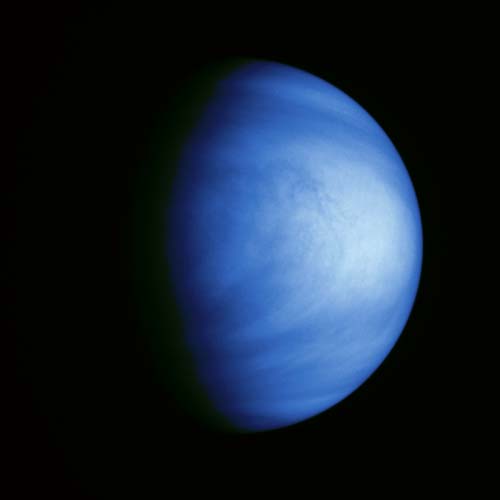
The thick clouds of Venus (nasa data centre)
 
But imagine, if it is possible, a world enshrouded by impenetrable clouds; with nights remarkable only for their lack of daylight. These planets do exist. Far above Venus’s highest peaks exists a thick sulphuric acid cloud layer that scatters all light away. Titan, Saturn’s largest moon, is also covered by haze, this time created by hydrocarbon molecules such as ethane. Even the Earth has its own layer – if human eyes were adjusted to a wavelength around 1mm we would see a star-consuming haze above caused by atmospheric water.
So, how would humanity have developed if the night sky was devoid of the features we take for granted now? It seems certain that humanity’s perception of our place in the universe would change - lives will be played out in two dimensions, as if sandwiched between two sheets of paper. In this parallel reality, the world would probably be thought of as flat until the time of global exploration.

Even if the study of mathematics, thermodynamics, electricity and magnetism continued, without observations of the other planets, the system of an Earth-centred universe may well have persisted. The idea of gravity would also be a relative late-comer, developed only after the force theories of electricity and magnetism. Not only would the theories of physics be different, but so would any notion of how our world formed. Only through observing our own solar system (and others) have we theorised how our planet and the seven other planets around our sun were formed. Without the night sky to prove this, ancient creation myths will have endured.
However, suppose this hypothetical civilisation reached a technological age. Having lived under cloudy starless skies for an eternity, picture the moment when the first ever rocket to carry humans above the thick hazy atmosphere arrived. Until pictures could be taken and developed, the stories of those first few astronauts would almost certainly be met with disbelief. After this eureka moment, the perceptual shift would be incomprehensible. Where before there was nothing but grey haze above, there was suddenly a universe teeming with stars. Planets circle in eccentric orbits around a great shining ball of fire at the centre of the solar system. Galaxies spin millions of light-years away containing a hundred billion suns. And this is what we get to see. Every night. The most amazing thing is that no one seems to realise how lucky we are.

Sunday, 7 August 2011

Another Earth?

A few years ago, during the course of a pre-university preparation week, I took part in an Arts vs Sciences debate. (I say 'took part', I was one of the 90% that, never having debated before, stood at the back trying to avoid participation of any sort). But during the course of this petty intellectual squabble one argument stands out in my mind:.
"Art simply poses questions. It is up to science to answer them."
     I think the reason this stuck in my memory like gum to a shoe was because I was so opposed to it. When, I thought, has art ever given science a helpful push in the right direction? Was it only with John Milton's Paradise Lost that Newton could invent his law of gravitation? Did Picasso's 'Blue period' inspire Einstein to create the special theory of relativity. Could Stanley Kubrick's 2001: A Space Odyssey have led to our knowledge of black holes. The answer, to me, seemed to be a resounding No. Art kept to its corner of society, science kept to ours.

But today a piece of art set my mind rolling along avenues usually reserved for scientific thinking. The inceptive art piece was a trailer for an independent movie released in October called 'Another Earth'. The plot is set around the fantastical premise that a second planet Earth has appeared in the solar system, and on it is contained a carbon copy of all human life, including ourselves. Ok, so at first the idea of a planet cloning itself seems a little wacky, and I would completely agree. But it led me to think -how impossible would it be for two habitable planets, orbiting each other to circle a star such as our sun? Could there be a planetary system, somewhere, with two Earths?

Many bodies in the universe orbit each other in binary partnerships. Most stars are thought to have stellar companions formed when gas collapsed under their own gravity. Some of these binary systems such as Mizar and Acrux can be seen on clear nights. A handful of asteroids have been found that orbit each other as they slowly move about the sun. The dwarf planet Pluto and its large moon Charon are also often called a double planet system. This is because Charon, weighing in at one ninth of the mass of Pluto, orbits a combined centre of mass that lies between it and Pluto. But how about Earth-sized bodies?

Just like in art, original ideas are hard to come by in science - often it seems like everything interesting has been done. However, despite many discovered binary systems, a quick journal search for binary planet formation shows almost no results! Exploring whether these equal-mass double-planet systems are possible would not only be incredibly interesting, but also could become testable as more and more exoplanets are discovered. In fact, the detection of a binary exoplanet might even put to rest one of the longest standing arguments in planetary science - whether large, Jupiter-like planets formed by gravitational instabilities (which, being similar to star formation, might create binary systems) or by accretion (which wouldn't). They might also help explain why planets have been found wandering freely through the galaxy, as it might be easier for binary planets to destabilise and be thrown from the solar systems.  'Three-body problems' are extremely complex, however, and the interaction of the sun and with other large planets may make such systems impossible.

Despite my previous opposition, bouncing scientific ideas off art can generate interesting and unproven results. So maybe, just maybe, art has a use after all...